
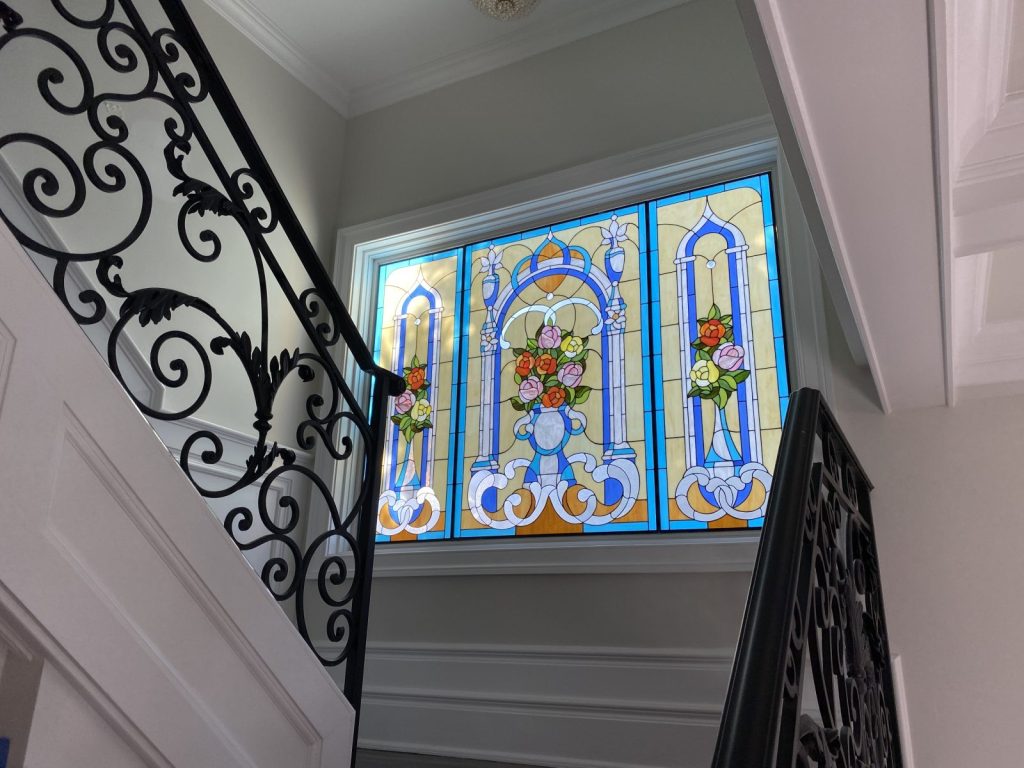
A floral stained glass window should suit the room as well as the flower that inspires it. A bold rose or delicate vine can be beautiful, but color, placement, daylight, and privacy all affect how the finished design feels in its setting. If you’re unsure whether a decorative panel will complement your home without making a room feel too dim or exposed, begin with the room’s purpose and existing light.
With a few thoughtful choices, a floral motif can feel personal and work well within the space. This guide covers how to choose flowers and colors, consider light and privacy, and prepare useful details before discussing a custom design. It also explains how to turn an initial idea into a focused project conversation.
Casa Loma Art Glass designs and fabricates custom stained glass windows for residential and commercial spaces. Sharing your floral inspiration alongside the opening’s requirements helps connect the design to the room. Start by noting what the window needs to do, then explore which botanical forms and colors suit that purpose.
Key Takeaways
- Choose a floral stained glass window design that reflects your taste and suits the room’s character and purpose.
- Use focal blooms, foliage, and open space to create a balanced composition; color choices help shape the overall impression.
- Consider how the design and selected glass can balance natural light with the screening you want.
- Before discussing a custom design, gather opening dimensions, room photographs, and notes about important sightlines.
- A clear brief helps Casa Loma Art Glass connect your floral inspiration, opening requirements, and functional priorities during custom design and fabrication.
Table of Contents
- What Makes a Floral Stained Glass Window Feel at Home?
- How Flowers, Color, and Glass Build the Overall Design
- Will a Floral Stained Glass Window Preserve Light and Privacy?
- How to Prepare a Floral Stained Glass Window Design Brief
- Commissioning a Custom Floral Stained Glass Window with Casa Loma Art Glass
What Makes a Floral Stained Glass Window Feel at Home?
A floral stained glass window is an architectural glass feature depicting flowers, foliage, or other botanical forms. It brings botanical imagery into a window, adding color and character while remaining part of the room’s architecture. The design might center on a clear focal bloom, trace a climbing vine, or suggest a garden through layered natural shapes.
Flowers are a subject, not a fixed style. A finely observed blossom can complement a traditional interior, while simplified leaves or abstract petals may feel at ease in a contemporary room. Stained glass has a long creative history, with materials and techniques shaping how artists handle light and imagery. The history of stained glass offers useful context for understanding the craft. In a custom design, consider the motif, scale, and degree of detail alongside the room’s architecture and your preferences.
Which floral motifs can shape a stained glass design?
Recognizable blooms, such as roses or lilies, give a composition an immediate focal point. Small blossoms and delicate stems can create a lighter, more flowing impression, while leafy patterns put foliage at the center. Abstract botanical forms simplify petals, branches, or seed shapes into a suggestive design. A favorite flower or meaningful plant can be a personal starting point, even if you don’t want a literal illustration.
Think about scale as well as subject. Broad shapes and clear outlines tend to read more easily from across a room. Intricate details invite a closer look, but may be less visible from a distance. Choose a level of detail that fits the window’s size and how people will encounter it.
Where can a floral stained glass window be used?
Start with the opening’s light and the room’s purpose. In an entry, a floral panel can create a welcoming accent. In a living area, it might complement existing colors and furnishings. In a private space, consider the amount of screening the household wants. The effect depends on the design and setting, not simply on the flower depicted.
Before choosing a location, note the opening’s dimensions, its relationship to the room, and the views around it. These details help a designer consider whether the opening and your preferred design are a suitable match.
How Flowers, Color, and Glass Build the Overall Design
A successful floral window guides the eye rather than asking every detail to compete. A prominent bloom can serve as the focal point, with stems and foliage leading the eye through the composition. Open space around those forms gives the design room to breathe and helps the central motif remain clear. In a balanced floral stained glass window, the flower, leaves, color relationships, and surrounding glass work as one composition.
Glass affects how that composition appears in the room. Textured or less transparent areas can soften a view, while clearer sections allow more of the scene beyond the window to remain visible. Color can also look different as daylight changes in intensity and angle. For context on the construction of historic windows, the U.S. National Park Service explains historic stained and leaded glass.
How should you choose colors for a floral window?
Begin with the room’s finishes and furnishings, then decide what atmosphere you want the window to support. Warm colors can give a space a lively, welcoming character; cool shades may feel quieter, while muted tones can sit gently alongside a restrained interior. Strong contrast can make the window a more noticeable focal point. No palette is automatically right. The best choice depends on the room and the effect you prefer.
Gather color references from paint, textiles, or furnishings, and look at them in the room’s natural light. A palette that seems balanced on a screen or in a sample may feel different beside the actual window. In a custom design conversation, share the references and discuss how they relate to the opening and overall composition.
How do detail and composition affect the finished look?
Consider where people will view the panel. Larger petals, leaves, and clear divisions tend to remain legible from across a room. Fine veins, small blossoms, and delicate stems can reward closer inspection, though an abundance of intricate detail may be difficult to distinguish at a distance. As a practical guide, match motif scale and color contrast to the distance from which the window is usually seen.
Leave visual breathing room around focal elements so each bloom has space to register. One prominent flower with a few supporting leaves creates a different rhythm from smaller botanical forms distributed throughout the panel. If you’re exploring a bespoke design, custom stained glass windows from Casa Loma Art Glass can be designed around your floral inspiration and project requirements.
Will a Floral Stained Glass Window Preserve Light and Privacy?
It can be designed with daylight and privacy in mind, but neither outcome is automatic. The effect of a floral stained glass window depends on its composition, the glass selected, the opening’s orientation, and the room’s needs. A design with clear, open areas may feel different from one with dense color or detail. Consider function along with appearance from the start.
Notice how much natural light the room receives now and when it is brightest. In a dim room, a dense composition may not support the same feeling of openness as a lighter, more open design. Where screening matters, the brief can give greater weight to obscuring particular views. Color, opacity, texture, and orientation can all affect how bright or private a window seems. For specific light-transmission expectations, ask for information tied to the proposed glass rather than relying on a general estimate.
How does floral glass affect daylight and color?
Colored areas can alter the quality and perceived tone of daylight, while texture and transparency affect how clearly light and views pass through. The same design may look different as daylight changes during the day. If the window is a key source of light, consider how much of the composition will use detailed or visually dense forms. Discuss the proposed glass choices and their expected effect for the specific opening.
Can a floral window offer privacy without feeling closed in?
Potentially, depending on the final design and glass specification. Blooms, foliage, and more open areas can be arranged with the views you want to soften and the light you hope to retain in mind. Before settling on a design, consider sightlines from both inside and outside the room, including views from neighboring windows or a nearby walkway. A panel’s appearance alone cannot confirm how much privacy it will provide.
Use these questions to prepare for a design discussion:
| Room priority | Questions to discuss |
|---|---|
| Preserving daylight | How might the proposed colors and glass choices affect the room’s existing light? |
| Screening a view | Which sightlines should the composition help obscure, from inside and outside? |
| Balancing both | Can the design distribute detailed and more open areas to address each need? |
Raise these priorities early in the custom design conversation. Casa Loma Art Glass designs and fabricates stained glass windows around client inspiration and project requirements. Confirm the specific glass options and expected performance for the intended opening.

How to Prepare a Floral Stained Glass Window Design Brief
A useful design brief connects the window’s purpose to the details that will shape its appearance. Note what you want the panel to do in the room: introduce a botanical focal point, complement existing finishes, or address a particular sightline. Then gather information about the opening and collect visual references. You don’t need a finished drawing. A clear sense of your priorities gives a custom designer room to interpret your ideas.
A custom designer first needs to understand the opening, the room around it, and the look and function you want the window to serve.
What should you measure and photograph before a consultation?
Record the opening’s width and height, and confirm with the designer how measurements should be taken before relying on them for planning. Photograph the full window and its surroundings, including nearby trim, wall colors, furnishings, and views through the opening. These images provide context that dimensions alone cannot show.
Make a note of project constraints and questions, too. For example, mention whether the opening is part of a renovation, whether other work needs to be coordinated, or whether you already know of requirements for the finished window. If you’re unsure about technical specifications, leave them for the project discussion.
How can you communicate your floral design preferences?
Describe the flowers or plants that appeal to you, the colors you’re drawn to, and the mood you hope to create. You might prefer one recognizable bloom, a loose arrangement of leafy stems, or an abstract interpretation of botanical forms. Note whether you imagine bold shapes that read across the room or fine details that invite a closer look.
Gather references from gardens, artwork, textiles, or interiors, and label what you like about each one. A photograph might inspire its color palette rather than its exact composition. Separating must-have elements from flexible inspiration helps preserve what feels personal while allowing design expertise to guide proportion and arrangement.
Include practical priorities alongside aesthetics. Note where you want more daylight, whether particular views should be screened, and which sightlines matter from inside or outside. These details frame the design conversation without assuming that a reference image or glass choice will perform the same way in every opening.
Opening information, room photographs, and a considered set of references will help you discuss a floral stained glass window commission with Casa Loma Art Glass. Discuss your custom stained glass window ideas as a starting point for aligning your floral inspiration with the project requirements.
Commissioning a Custom Floral Stained Glass Window with Casa Loma Art Glass
A custom commission brings your floral inspiration into conversation with the opening and the room. Casa Loma Art Glass designs and fabricates stained glass windows for residential and commercial spaces, translating client ideas and project requirements into an architectural feature. Your brief does not need to be a finished design. It can start a discussion about the botanical forms you have in mind, the character of the space, and what the window should do.
What happens when your floral window idea becomes a custom project?
An initial discussion can focus on four connected topics: the motif, the room, the opening, and practical priorities such as daylight or screening. Share what matters most, whether that is a particular flower, a softer botanical impression, or a design that complements the room’s existing character. Ask how your references and priorities may inform the composition, and which decisions still need to be explored.
Design and material details depend on the individual project, so confirm the relevant options and process directly rather than assuming one approach suits every opening. Ask what information is needed to assess your project and how functional considerations will be considered alongside appearance. This keeps the conversation grounded in both your vision and the space’s requirements.
How can you take the next step with your design idea?
Before making an inquiry, gather useful room photographs, opening measurements, and floral or interior references. Add a short note about the mood you hope to create, which elements are essential, and what can remain open to interpretation. Include priorities such as daylight or particular sightlines. You can share what you know without settling every detail in advance.
A thoughtful brief gives the conversation a clear beginning while leaving room for the design to develop. If you’re ready to explore a custom stained glass window, discuss your custom stained glass window with Casa Loma Art Glass and share the ideas and project details you’ve gathered.
Bring Your Floral Window Idea Into Focus
A floral design feels most at home when it grows from the room’s character and how you use the space. Let a meaningful flower or botanical form guide the composition, then consider how scale, color, and glass choices relate to your preferred balance of daylight and privacy. Opening measurements, room photographs, and sightline notes can help turn inspiration into a focused design conversation.
Casa Loma Art Glass designs and fabricates custom stained glass windows for residential and commercial spaces. Sharing your preferences alongside the opening’s requirements gives the studio a clearer picture of what you hope your floral stained glass window will bring to the room.
Gather the ideas you have so far, even if they’re still taking shape, and discuss your floral stained glass window idea. Your references and priorities are a practical starting point for a design that feels personal and belongs in its setting.
Frequently Asked Questions
What flowers work best in a stained glass window?
The best flowers are those that suit the room, the desired mood, and the opening’s scale. A rose or lily can create a recognizable focal point, while smaller blossoms, leafy stems, or abstract petals can form a softer pattern. Consider how clearly you want the flower to read from across the room. A custom design can interpret a meaningful plant literally or use it as a more subtle source of inspiration.
Can a floral stained glass window be designed for privacy?
Yes, privacy can be included as a design priority, but the result depends on the composition, glass specification, placement, and sightlines. Discuss which views you want to soften from inside and outside the room, and whether you also want to preserve a sense of openness. Don’t assume a floral pattern alone will provide a particular level of screening. Ask how the proposed glass and layout relate to your privacy needs.
Will a floral stained glass window reduce natural light?
It may change how daylight enters and feels in a room. The effect depends on the selected glass, colors, texture, opacity, and window orientation. A detailed or visually dense composition may feel different from a design with more open areas. Consider how much daylight the room receives now and when it is brightest. For specific expectations about light transmission, ask for information tied to the proposed glass rather than relying on a general estimate.
How do I choose colors for a floral stained glass window?
Start with the room’s finishes, furnishings, and the atmosphere you want to create. Warm colors may feel lively and welcoming, while cool or muted shades can support a quieter impression. Contrast can make a focal bloom stand out. No palette is universally best. Collect references from paint, textiles, or artwork, then compare them with the room’s natural light. Colors can appear different in a sample or image than they do in the window’s setting.
Can I request a stained glass window based on a favorite flower?
Yes, a favorite flower can be the starting point for a custom design. You might request a recognizable bloom or share it as inspiration for a looser arrangement of petals, stems, and foliage. Casa Loma Art Glass designs and fabricates custom stained glass windows, translating client inspiration and project requirements into an architectural feature. Bring references and explain what you value about the flower, while remaining open to discussing how it can suit the opening.
What information should I provide when commissioning a custom stained glass window?
Share the opening’s dimensions, photographs of the window and surrounding room, and notes about important sightlines. Describe the flowers, colors, mood, and level of detail you prefer, separating must-have elements from flexible inspiration. Include practical priorities such as daylight and privacy, along with any project constraints you already know. This helps the designer understand both your visual direction and the setting without requiring a finished drawing.
How do I measure a window opening for a custom stained glass design?
Begin by recording the opening’s width and height, then confirm with the designer how measurements should be taken and what details are needed. Requirements can depend on the project, so don’t treat initial measurements as final specifications without checking. Photograph the full opening, nearby trim, and surrounding room as helpful context. If you’re unsure how to measure accurately, ask what information to provide before design decisions proceed.