
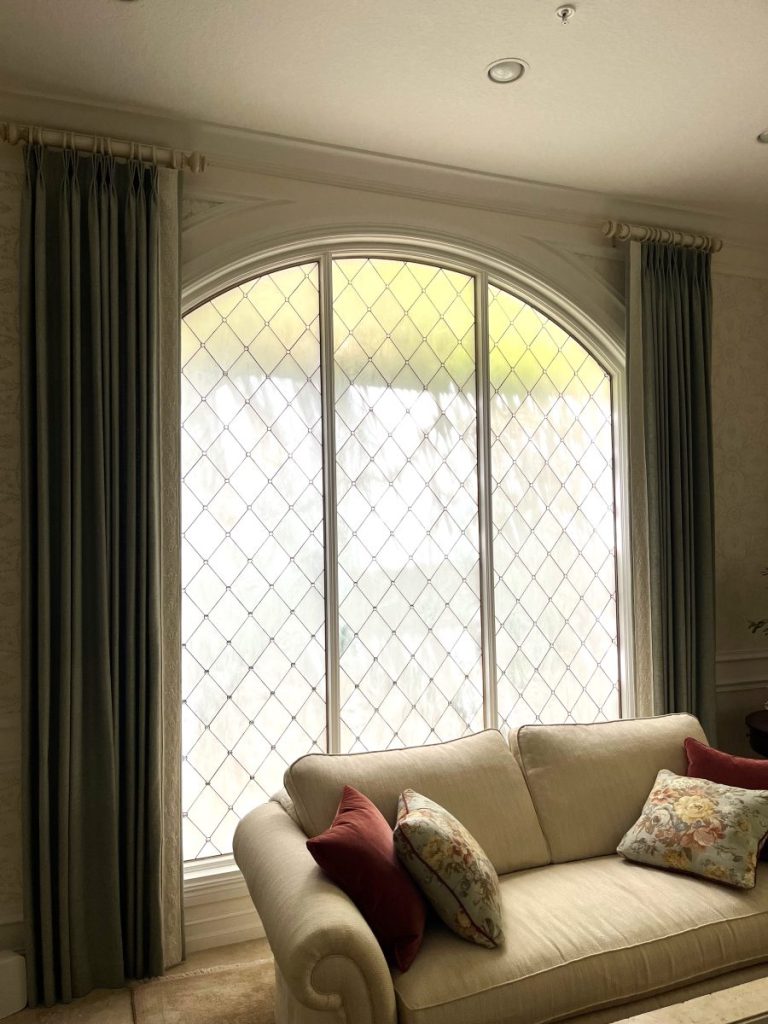
What if privacy came from softening what you can see, rather than shutting out daylight? Creating privacy without losing light starts with that shift: a room can feel more sheltered without relying on a solid, light-blocking barrier.
It’s understandable to worry that obscuring a view will leave a space dim or that a privacy finish won’t suit the room’s style. The right approach depends on how much screening you need, where the sightlines fall, and how daylight moves through the space. Glass can soften views while maintaining a sense of openness, whether through a considered placement, a textured finish, or a decorative design tailored to the room.
This guide explains how to balance privacy and brightness, compare glass treatments, and match an option to a room’s purpose. It also shows how custom decorative glass panels, cabinet inserts, and stained glass can serve a functional role as well as an artistic one, bringing privacy and character together in a thoughtful design.
Key Takeaways
- Start by identifying the sightlines you want to soften. Privacy often depends on glass placement as much as its finish.
- Compare clear, translucent, textured, patterned, and stained glass by how each shapes views and contributes to the room’s character.
- Match the level of screening to the room’s use, available daylight, window position, and interior style.
- Creating privacy without losing light is easier when you map viewing angles and daylight before settling on a glass design.
- Custom decorative panels and stained glass can bring practical screening together with details tailored to your space.
Table of Contents
- Creating Privacy Without Losing Light Starts With Understanding Sightlines
- How Glass Texture and Pattern Create Privacy While Letting Light Through
- Choose a Privacy Glass Approach That Fits the Room and Its Sightlines
- How to Plan a Privacy-Without-Losing-Light Glass Design
- Custom Decorative Glass Makes Privacy Part of the Design
Creating Privacy Without Losing Light Starts With Understanding Sightlines
Before choosing a glass finish, identify what needs to be screened and where the view comes from. A nearby walkway may create a direct sightline into a ground-level window, while a neighboring window may expose only one side of a room. The room’s use and lighting matter too: a bathroom calls for a different level of screening than a shared interior, and a room can feel more exposed after dark when the lights are on.
Privacy without sacrificing natural light means softening clear views into or through a space while still allowing daylight to enter. The goal isn’t necessarily to eliminate every view. Translucent, textured, or patterned glass can diffuse visual detail and provide separation without turning an opening into an opaque barrier. Treat privacy and brightness as related design considerations, not opposing goals. The practice of bringing natural light into buildings is known as Daylighting, and thoughtful screening can help maintain a light-filled space while addressing unwanted views.
What does privacy without sacrificing natural light mean?
Privacy is about controlling what can be seen, not automatically blocking what can be lit. Depending on its design and viewing angle, glass can blur faces and details while still admitting daylight. The amount of screening varies, so decide what needs to remain indistinct and whether the view is direct or oblique. That gives you a more useful starting point than simply choosing the most opaque option.
Where do privacy and daylight compete most?
Street-facing windows, bathrooms, entry areas, and shared interiors often need a careful balance. A passerby may look directly through a ground-level window, while an interior partition may need to separate spaces without making them feel closed off. Nearby walkways, neighboring windows, and even the position of a sofa or desk can change what is visible from outside or from another room.
Observe the space at the times privacy matters most. Stand or sit where people usually gather, then note the direction of unwanted views, how far away they come from, and whether the concern changes as daylight shifts or the room is in use. A street-facing room may need screening across a broad window; an interior opening may only need to soften one particular line of sight. Identifying the difference helps you choose a glass design that suits the room without reducing light more than necessary.
How Glass Texture and Pattern Create Privacy While Letting Light Through
Glass doesn’t have to be completely clear or fully opaque to shape a room’s sense of privacy. Its surface, pattern, and arrangement can interrupt a direct view while allowing daylight into the space. The right choice depends on what you want to obscure, the direction people look from, and how much visual detail you want the glass itself to introduce.
How do translucent and textured glass finishes differ?
Translucent glass allows light through while diffusing clear detail, so forms on the other side may appear softened rather than sharply defined. Textured glass uses its surface to break up a direct view and add a decorative quality. The effect varies with the specific finish, viewing angle, distance, and lighting. Consider the actual sightline rather than assuming a finish will provide the same screening in every setting.
When can patterned or stained glass be a privacy feature?
Patterned glass can soften sightlines while giving a window or panel a distinct visual rhythm. A fine, closely distributed pattern creates a different effect from a larger motif with open areas, and the design’s placement affects how much of the view remains clear. Stained glass brings color and pattern together in an individual design. Its appearance and light transmission depend on the composition, so consider each design in relation to the room and its privacy needs.
| Glass type | View clarity | Daylight feel | Design character |
|---|---|---|---|
| Clear | Unobstructed | Open and direct | Simple, visually connected |
| Translucent | Details softened | Diffused | Quiet, understated |
| Textured | Interrupted by surface detail | Varies with finish | Tactile and dimensional |
| Patterned | Depends on pattern scale and spacing | Varies with coverage | Graphic or decorative |
| Stained | Depends on design and composition | Colored or shaped by the design | Distinctive and expressive |
Pattern scale and distribution are useful design tools. A motif concentrated where a sightline crosses the glass can preserve more open areas elsewhere, while an evenly repeated pattern creates a more consistent visual screen. This is central to creating privacy without losing light: balance moderated views, the room’s brightness, and the character of the glass.
For a design shaped around a room’s proportions and preferred visual style, custom decorative glass panels can bring screening and artistry together.
Choose a Privacy Glass Approach That Fits the Room and Its Sightlines
A useful glass choice responds to how the room is used, where people can see in, and how daylight enters. Consider whether screening is needed throughout the day or only at certain times. A space that needs regular privacy calls for a different design from one where an occasional view is the main concern. The glass should also complement existing finishes rather than feel like an interruption.
Which privacy needs are common in different rooms?
Bathrooms and entryways often have direct sightlines that call for more visual screening, while living areas may benefit from preserving a bright, open atmosphere. In a shared interior, a glass door or partition can define separate zones while maintaining a sense of connection. Cabinet inserts offer another application: they add detail to built-ins while allowing you to choose how visible the contents are through the glass.
Use this quick checklist to frame the decision:
- Bathroom: Identify views from neighboring windows or nearby paths, and consider which parts of the opening need the most screening.
- Entryway: Notice whether the view runs directly from the exterior to a frequently used area inside.
- Living area: Decide which views you want to soften while keeping daylight and a sense of openness.
- Shared interior: Consider whether a glass door or partition should separate activity while retaining visual flow.
How should you assess a window before choosing a design?
Observe the opening from realistic positions, both standing and seated. Check the view from outside as well as from the places where people spend time indoors. A sightline from a walkway may differ from one coming through a neighboring window, and the best screening depends on which view feels intrusive.
Daylight changes throughout the day, and interior lighting can alter how exposed a room feels in the evening. Note which areas receive light, when the room is typically occupied, and whether the need for screening changes after dark. Then clarify which views should be softened and which are worth preserving. This practical assessment keeps creating privacy without losing light focused on the room’s real use, rather than a one-size-fits-all finish.
Glass can be incorporated into windows, cabinet inserts, and other decorative applications, with the design tailored to the opening and its surroundings. When privacy is part of everyday use, pattern placement and the area covered deserve particular attention. For a less frequent concern, a more open design may suit the room better. Aim to balance screening, brightness, and visual character throughout the space.

How to Plan a Privacy-Without-Losing-Light Glass Design
A considered glass design begins with the room’s needs, not a pattern chosen on appearance alone. Record how the space is used, which views feel exposed, how daylight moves through it, and what visual character would feel at home. Those notes create a practical brief for balancing privacy, light, and style.
What should you decide before selecting privacy glass?
First, establish who needs privacy, from which direction, and at what times. Then consider the opening, its surrounding finishes, and the architecture already in the room. A discreet treatment may suit a calm interior, while a decorative feature may be welcome where the glass is intended to draw the eye.
How can you balance privacy, daylight, and design?
Begin with the least visually obstructive approach that addresses the actual sightline. If practical, compare glass samples or design references in the room, observing them in daylight and with the interior lights on. A finish can look different as lighting and viewing angles change, so seeing it in context helps refine the choice.
The result depends on how sightlines, glass finish, and placement work together.
Use this sequence to move from observation to a more resolved design:
- Map the unwanted views. Note where someone might look in from, and the positions inside the room where privacy matters most.
- Record how the room is used. Consider daily activities, who shares the space, and whether privacy is needed throughout the day or only occasionally.
- Track the daylight. Observe which areas receive natural light and how the room feels at different times, including after dark when interior lights are on.
- Set the visual direction. Decide whether the glass should feel subtle, decorative, or prominent, and note the colors, patterns, and finishes that suit the interior.
- Refine the design in context. Consider the opening’s proportions, surrounding materials, and architecture as you align glass type and pattern placement with the views you want to soften.
This process keeps creating privacy without losing light focused on the whole space rather than on the glass alone. Pattern, placement, and glass type each contribute to the final effect, so a beautiful design should also suit how the room is used and seen.
For a design tailored to your space, explore custom decorative glass to bring practical screening and individual character together.
Custom Decorative Glass Makes Privacy Part of the Design
Privacy glass can be more than a practical layer between a room and the outside world. In a considered design, its pattern, scale, and placement relate to the opening’s proportions, surrounding finishes, and the interior’s visual character. Creating privacy without losing light is a design question as much as a functional one: what should the glass soften, and how should it contribute to the room?
How can custom glass bring privacy into the overall interior?
A decorative panel can echo shapes, colors, or details already present in a space, while its pattern helps moderate a view across or through the glass. The design might be understated, allowing the surrounding architecture to lead, or more expressive, giving the glass a clear presence. Stained glass brings color and pattern together, while other decorative glass designs offer different ways to add detail. The effect on visibility and daylight depends on the specific composition and setting, so consider each design in context.
Placement also shapes the result. A pattern can be arranged to address a particular sightline or establish a visual rhythm across an opening. Rather than treating the glass as an afterthought, this approach makes it part of the room’s design, complementing nearby materials and finishes while serving a practical purpose.
What can a custom glass design process consider?
A tailored design begins with the room and the people who use it. The privacy goal, the views to be softened, the desired level of openness, and the preferred visual character all help inform the glass selection and pattern. Proportions and existing architectural details matter too, because a design that feels balanced in one opening may need a different scale or arrangement in another.
Think of the process as bringing several decisions together: where the glass will be used, what it should screen, how daylight enters, and whether the finished piece should blend in or become a focal point. Custom architectural and decorative glass fabrication makes it possible to develop panels around individual design requirements, rather than relying on a single look for every room. Consider the intended effect in its actual setting, since one pattern won’t provide the same privacy in every condition.
As a next step, define the room, the sightline that feels exposed, and the design effect you’d like the glass to create. Explore Casa Loma Art Glass’s custom work to see how decorative panels and stained glass can bring personal character to a considered privacy design.
Shape a Brighter, More Private Space
Creating privacy without losing light starts with understanding the sightlines that matter, then choosing glass that softens those views without making the room feel closed off. Texture, pattern, and placement all influence the effect, so the best design considers how the space is used alongside the character you want it to have.
Custom glass fabrication can bring those priorities together in a piece tailored to individual project requirements. Casa Loma Art Glass creates decorative glass panels, stained glass, and cabinet inserts, balancing practical purpose with personal style. A clear picture of the room, the view you want to moderate, and the visual effect you prefer is a thoughtful place to begin.
Explore custom decorative and architectural glass and imagine how a considered glass design could complement your space. With the right balance of openness and screening, privacy can feel like a natural part of a bright, welcoming interior.
Frequently Asked Questions
Can glass provide privacy without blocking natural light?
Yes, glass can soften clear views while still allowing daylight into a room. Translucent, textured, patterned, and stained glass each diffuse or interrupt sightlines in different ways, while clear glass preserves an unobstructed view. The effect depends on the design and setting, including viewing angle and lighting. Start by identifying what needs to be obscured, then consider a finish that balances that privacy goal with the room’s brightness and character.
What type of glass lets light in but obscures the view?
Translucent or textured glass is often considered when you want light to pass through but need to blur visual detail. Patterned glass can also break up a direct view, with its effect shaped by the pattern’s scale, spacing, and coverage. There isn’t one finish that provides the same screening in every room. Consider the viewing distance, angle, and intended use of the space when comparing options.
Does textured glass provide privacy at night?
Textured glass can interrupt a view, but it shouldn’t be assumed to provide complete privacy at night. Interior lights can make a room more visible from outside, and the result depends on the texture, viewing angle, distance, and activity behind the glass. Consider how the space appears after dark as well as during daylight. For a room needing dependable everyday screening, assess the specific sightlines and design in context.
How do you make a room more private without making it darker?
Begin by pinpointing the views that feel exposed, then consider ways to soften those sightlines instead of covering the entire opening with an opaque barrier. Translucent or patterned glass may diffuse views while admitting daylight; thoughtful placement can focus screening where it’s most needed. Sheer or light-filtering window coverings are another possible approach. The best fit depends on the room’s use, its light, and whether privacy is needed occasionally or every day.
Is stained glass a practical way to add privacy to a home?
Stained glass can contribute visual screening while adding color and distinctive character, making it a practical design option for some home settings. The privacy and amount of light passing through depend on the composition and how the glass is placed, so not every design will suit every sightline. Consider what you want to obscure and how prominent you’d like the glass to feel. A tailored design can relate to the opening and surrounding interior.
Can decorative glass be used in interior doors or partitions?
Yes, decorative glass can be used in interior doors and partitions to define areas while preserving a visual connection between spaces. The design can be selected with the room’s proportions, surrounding finishes, and desired level of screening in mind. A subtle pattern may complement a quiet interior, while a more expressive panel can become a feature. The precise privacy effect varies with the glass design and the views across the space.
What should you consider before choosing privacy glass for a window?
Consider the room’s use, the direction and distance of unwanted views, and whether screening is needed during the day, evening, or both. Notice how daylight enters and how interior lighting changes the view after dark. Also think about which sightlines should remain open, the opening’s proportions, and the visual style you prefer. These details help guide glass type, pattern, and placement toward a considered balance of privacy, light, and character.