
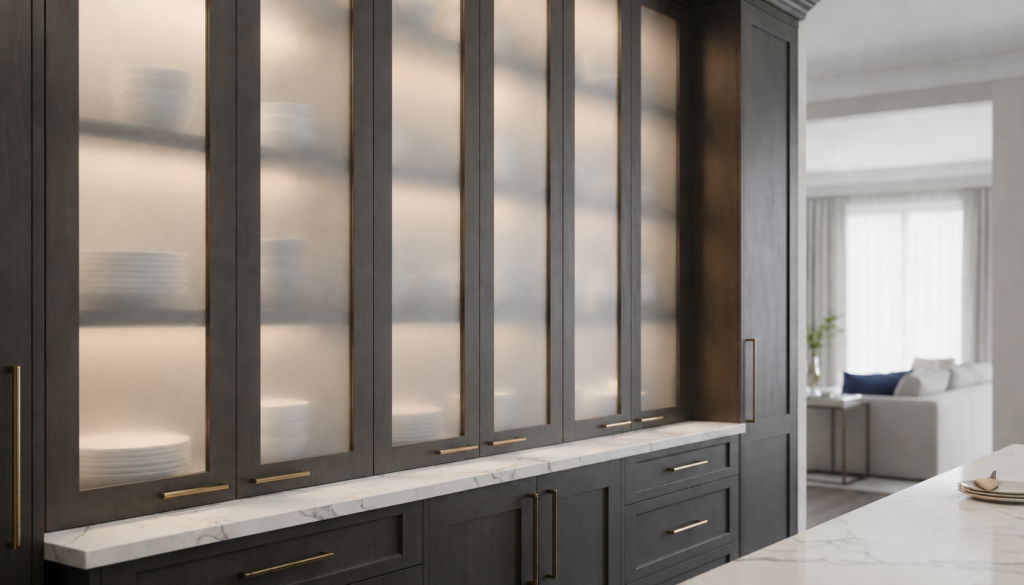
What if your kitchen cabinets could offer the airy, expansive feel of glass without forcing you to curate every stack of plates like a museum exhibit? It’s a common dilemma for those seeking a modern aesthetic; you want the depth that glass provides, but you don’t necessarily want your mismatched coffee mugs on full display. We understand that the pressure of maintaining perfectly organized shelves can take the joy out of a kitchen refresh, especially when standard clear glass seems to highlight every smudge and fingerprint.
In this guide, we’ll show you how frosted glass cabinet doors serve as the ultimate design compromise, balancing sophisticated style with practical concealment. By choosing the right opacity and texture, you can achieve a clean, minimalist look that keeps your storage private while still allowing light to dance through your space. We’ll walk through the nuances of acid-etched versus sandblasted techniques, explore the 2026 shift toward warmer neutrals and mixed materials, and help you manage the process of selecting high-quality, bespoke inserts that reflect your personal vision. Whether you’re retrofitting existing frames or designing a new culinary sanctuary, you’ll discover how to transform functional storage into a soft-focus architectural feature.
Key Takeaways
- Understand how the “soft-focus” effect of frosted glass balances a luminous, airy aesthetic with the practical need to obscure everyday cabinet clutter.
- Identify the functional differences between sandblasted and acid-etched glass to choose a texture that meets your specific maintenance and design requirements.
- Learn to select the perfect opacity for your frosted glass cabinet doors by considering how both internal and external lighting will influence transparency.
- Discover the advantages of bespoke fabrication, which ensures that each custom glass insert is precisely cut to fit your unique cabinetry and conceptual vision.
Table of Contents
- The Modern Appeal of Frosted Glass Cabinet Doors
- Understanding Frosting Techniques: Sandblasted vs. Acid-Etched Glass
- Choosing the Right Opacity to Hide Cabinet Clutter
- Design Inspiration: Integrating Frosted Glass into Your Home Aesthetic
- Customizing Your Cabinetry with Casa Loma Art Glass
The Modern Appeal of Frosted Glass Cabinet Doors
Frosted glass is an architectural finish created through sandblasting or acid etching that transforms clear panes into translucent surfaces. In the context of modern cabinetry, it serves as a sophisticated middle ground between the complete exposure of clear glass and the solid weight of traditional wood. This material doesn’t just block a view; it intentionally scatters light to create a “soft-focus” effect that preserves the airy feel of a room while keeping the specific contents of your cupboards private. It’s a thoughtful solution for homeowners who appreciate the depth of glass but prefer a more curated, serene visual environment.
As minimalist design continues to evolve in 2026, we’re seeing a distinct shift away from the high-maintenance nature of clear glass. While clear panes can feel stark or cold, frosted glass cabinet doors offer a warmer, more inviting texture that feels soft to the touch and the eye. This diffusion is especially helpful in kitchens with limited natural light. By catching and spreading illumination from windows or under-cabinet LEDs, frosted inserts can effectively brighten dark corners that would otherwise feel recessed and heavy. It’s a way to make your kitchen feel larger and more luminous without a total structural overhaul.
Why Frosted Glass Outperforms Clear Glass for Busy Kitchens
The reality of a working kitchen often involves mismatched dishware, colorful pantry staples, and the occasional stack of plastic containers. Clear glass fronts demand a level of organization that is difficult to maintain during a busy week. Frosted glass silences this visual “noise” by obscuring sharp outlines and vibrant labels, leaving only a hint of shape and color behind the pane. Beyond the aesthetic benefits, the textured surface is naturally more resilient in a high-traffic environment. It hides the subtle fingerprints, steam smudges, and water spots that are immediately visible on standard clear glass, allowing your kitchen to look polished even between deep cleanings.
The Aesthetic Versatility of Translucent Inserts
One of the most compelling reasons to choose translucent inserts is their ability to break up the visual density of solid cabinetry. A long run of floor-to-ceiling wood or painted cabinets can often feel like a wall, making a room feel smaller than it is. Integrating frosted glass cabinet doors adds a layer of depth that suggests an open space beyond the door frame. This versatility allows them to complement a wide range of styles, from the clean lines of an ultra-modern flat-panel kitchen to the timeless feel of a transitional Shaker-style home. It provides a sense of artistic interpretation, where the glass becomes a canvas that reflects the light and mood of your home.
Understanding Frosting Techniques: Sandblasted vs. Acid-Etched Glass
While many assume “frosted” is a single category, the method used to achieve that translucent glow significantly impacts both the look and the longevity of your frosted glass cabinet doors. Choosing between sandblasting and acid etching isn’t just a technical decision; it’s about matching the glass’s physical properties to the rhythm of your home. Each technique offers a distinct tactile experience and light-scattering quality that can either lean into a rustic, deep matte or a smooth, contemporary satin.
Sandblasted Glass: The Traditional Artisan Choice
Sandblasting is a mechanical process where high-pressure streams of abrasive materials, such as sand or glass beads, are directed at the surface to erode the top layer. This method creates a deep, noticeably matte texture that provides excellent light diffusion and privacy. Because it’s a manual, physical process, it offers incredible flexibility for those seeking bespoke designs. You can adjust the intensity of the blast to achieve varying levels of opacity or even create intricate, etched patterns that add a layer of personal artistry to your cabinetry.
However, because sandblasting creates a microscopically pitted surface, it is naturally more porous than other finishes. In a kitchen environment, these tiny pits can trap oils from fingertips or cooking splatters. To ensure your investment remains pristine, we often recommend applying a protective sealer or choosing this method for decorative panels that aren’t handled daily. If you’re envisioning a unique, custom-cut design, exploring our custom cabinet glass inserts can help you find the perfect balance between artisan detail and functional durability.
Acid-Etched Glass: The Smooth, Satin Alternative
Acid-etched glass, often referred to as “satin glass,” is created through a chemical treatment using hydrofluoric acid. Unlike the physical impact of sandblasting, the acid creates a uniform, permanent finish that is exceptionally smooth to the touch. This process results in a sophisticated, soft-focus appearance that appears to glow from within when backlit. Because the surface is chemically altered rather than physically pitted, it’s significantly more resistant to fingerprints and water spots, making it the premier choice for high-traffic modern kitchens.
For families who prioritize ease of maintenance without sacrificing a minimalist aesthetic, acid-etched glass is often the ideal solution. It doesn’t require the same level of protective coating as sandblasted options and stands up beautifully to the frequent cleaning required in a busy culinary space. By choosing this method for your frosted glass cabinet doors, you’re investing in a durable, high-quality surface that maintains its luminous clarity for years to come.
Choosing the Right Opacity to Hide Cabinet Clutter
Opacity in decorative glass panels is the primary tool for managing visual privacy within your home. It isn’t a binary choice between clear and opaque; rather, it’s a spectrum that ranges from a light mist to a dense, milky finish. When selecting frosted glass cabinet doors, it’s vital to consider how light interacts with the surface from both sides. During the day, external light hits the frosted surface and scatters, making the glass appear more opaque and reflective. This is often when the glass looks its most solid and private.
However, once you turn on interior cabinet lights, the visual balance shifts. This can create what designers call the “silhouette effect,” where the dark shapes of objects inside become visible against the glowing backdrop of the glass. If your goal is to hide a busy pantry, you’ll need to account for this change in transparency. To minimize this effect, we suggest placing items slightly back from the glass or opting for a higher opacity level. It’s a methodical process of matching the glass’s density to the specific items you intend to store behind it.
High Opacity for Pantry and Utility Storage
In areas like the pantry or utility closet, where colorful packaging and mismatched boxes are the norm, a high-opacity frost is often the most rewarding choice. This heavy frosting effectively erases the visual noise of labels and plastic containers. It replaces clutter with a uniform, luminous glow across the entire bank of cabinets. While it obscures the details of your storage, it still allows natural light to permeate the space. This prevents larger storage units from feeling like heavy, light-absorbing blocks in your room design, maintaining an open and airy atmosphere even in high-density storage zones.
Medium Opacity for Dinnerware and Glassware
If you’re looking to showcase the elegant curves of your stemware while still softening the overall look, medium opacity provides a perfect middle ground. This level of frost creates a “misty” aesthetic that adds a layer of mystery and depth to your display cabinets. It’s a beautiful way to hint at the quality of your collection without the pressure of perfect, museum-style arrangement. To truly elevate this look, we recommend using interior LED strips. The light catches the microscopic texture of the frosted glass cabinet doors, making the cabinet appear as a soft lantern within your kitchen. This technique highlights the glass’s artisan quality while keeping the daily reality of your kitchen organization discreetly tucked away.
Design Inspiration: Integrating Frosted Glass into Your Home Aesthetic
Integrating frosted glass cabinet doors into your home is an exercise in intentional layering, where the glass serves as a bridge between structural form and ambient light. While the kitchen remains the most popular destination for these inserts, their utility extends gracefully into home offices and primary bathrooms. In a professional workspace, frosted panels can hide the visual clutter of files and supplies while maintaining a bright, energetic atmosphere. Within a bathroom, they offer a sense of spa-like serenity, obscuring toiletries while reflecting the soft glow of vanity lighting. This versatility allows you to create a cohesive design language that flows from one room to the next, unified by the shared texture and luminous quality of the glass.
One of the most effective ways to modernize a space is by revitalizing dated cabinet frames with custom-cut inserts. Instead of a full replacement, swapping out solid wood panels for translucent glass can completely shift the visual weight of a room. We’re seeing a growing trend in 2026 toward mixing and matching different door styles within a single layout. By pairing solid doors on lower cabinets with frosted inserts on select uppers, you create a sense of architectural rhythm and balance. This approach allows you to hide heavy cookware below while presenting a lighter, more decorative face at eye level, making the entire room feel more intentional and curated.
The Minimalist Kitchen: Frosted Glass and Slab Doors
For those pursuing a minimalist or “Scandi” inspired aesthetic, frosted glass cabinet doors paired with flat-panel slab doors create a seamless, monochromatic look. This combination is particularly striking in white or soft grey palettes, where the glass adds a subtle shift in texture without introducing unnecessary visual noise. Using slim aluminum frames further enhances this industrial-modern feel, providing a crisp, metallic edge that defines the translucent pane. This design strategy focuses on simplicity and the movement of light, helping to cultivate a “Zen” environment that feels both meticulously organized and expansive.
Transitional Spaces: Frosted Glass in Shaker Cabinets
In transitional homes, where traditional elements meet modern finishes, frosted inserts act as a softening agent for the structured lines of Shaker cabinetry. The translucent glass breaks up the repetition of wood grain, bridging the gap between classic timber and contemporary stainless steel appliances. This application is particularly effective for dining room sideboards or hutch cabinets, where you might want to suggest the presence of fine china without exposing every detail of the storage. If you’re ready to see how these elements can transform your specific space, we invite you to explore our gallery of decorative glass panels to find the perfect match for your home’s unique character.
Customizing Your Cabinetry with Casa Loma Art Glass
At Casa Loma Art Glass, we view every project as a collaborative journey between our technical expertise and your unique aesthetic vision. While mass-produced stock options often force you to compromise on dimensions or specific textures, our bespoke approach ensures that your frosted glass cabinet doors are tailored specifically to your home’s architecture. We focus on the intersection of art and utility, providing a level of care and artistic interpretation that mass retailers simply can’t replicate. It’s about more than just filling a frame; it’s about translating your personal taste into a tangible, high-quality feature that enhances your daily living space.
Our fabrication process is rooted in a commitment to absolute precision. We understand that even a fraction of an inch can make the difference between a seamless, professional installation and a frustrating fit. Every custom-cut insert is meticulously measured and finished to your exact specifications, ensuring a perfect match for any cabinet frame, regardless of its age or style. This dedication to detail allows us to bridge the gap between your conceptual ideas and a finished physical object that stands the test of time.
The Journey from Concept to Installation
The transition from a conceptual design goal to a final installation follows a methodical and steady rhythm. In our Deerfield Beach studio, our artisans handle every piece of glass with a focus on durability and visual clarity, applying years of architectural glass experience to every cut. While we take great pride in our local craftsmanship, we provide national fabrication and shipping to support homeowners and contractors across the country. This ensures that whether you’re working on a local renovation or a remote project, you have access to the same level of professional mastery and reliable service throughout the entire lifecycle of your commission.
Beyond Frosted: Exploring Textured and Stained Options
While frosted glass is a timeless choice for privacy and light management, your design possibilities extend into a wide variety of artistic textures. For those looking to add a specific historical character or a unique modern accent, we offer a range of decorative glass panels, including reeded, seeded, and patterned options. You might consider combining different styles for a truly custom home look. For instance, pairing a heavy frost on pantry doors with a subtle reeded texture on glassware cabinets adds a layer of sophisticated visual interest while maintaining a cohesive aesthetic. If you’re ready to explore these possibilities, we’re here to act as your creative guide.
Consult with our artisans to design your custom cabinet glass inserts today.
Elevating Your Interior with Bespoke Glass Artistry
Choosing the right elements for your cabinetry is about more than just storage; it’s about defining the light and mood of your home. We’ve explored how frosted glass cabinet doors provide a sophisticated “soft-focus” aesthetic that manages clutter while allowing your space to breathe. Whether you prefer the deep matte of sandblasting or the silky touch of acid etching, the final decision rests on how you want to interact with your kitchen or living area every day. By matching opacity to your specific storage needs, you can create a home that feels both open and meticulously organized.
At Casa Loma Art Glass, we take pride in being more than just fabricators. We’re your partners in the creative process, ensuring that every piece is artisan-crafted in the USA and custom-cut to your exact specifications. Our meticulous approach guarantees a perfect fit for your unique frames, while our nationwide shipping brings this specialized craftsmanship directly to your doorstep. We look forward to helping you transform your vision into a luminous reality that reflects the care and detail you put into your home.
Browse our gallery of custom cabinet glass inserts and start your project today.
Frequently Asked Questions
Is frosted glass for cabinets hard to keep clean?
Frosted surfaces are remarkably easy to maintain, often requiring less frequent cleaning than standard clear glass. While acid-etched options are naturally resistant to fingerprints and smudges, sandblasted glass can be treated with a protective coating to repel oils. For daily care, we recommend using a soft, lint-free cloth and a mild, non-abrasive glass cleaner to preserve the delicate, matte texture of your frosted glass cabinet doors without leaving streaks or residue.
Can I replace the glass in my existing cabinet doors with frosted glass?
You can absolutely retrofit your existing frames with new glass inserts to revitalize your kitchen’s aesthetic. If your current doors are already prepped for glass, the process is a straightforward swap. For solid wood doors, a professional can often route out the center panel to create a frame that accommodates our custom-cut inserts. This is a sustainable and cost-effective way to achieve a high-end, modern look without replacing your entire cabinetry system.
What is the difference between acid-etched and sandblasted glass?
The primary difference lies in the fabrication process and the resulting tactile finish. Acid-etching uses a chemical treatment to create a smooth, satin-like surface that is easy to clean and highly durable. Sandblasting uses high-pressure abrasives to create a deeper, more matte texture. While sandblasting offers more flexibility for custom artistic designs and varying levels of opacity, acid-etched glass is often preferred for high-traffic areas due to its superior resistance to fingerprints.
Will frosted glass cabinet doors hide all the clutter inside?
Frosted glass cabinet doors are designed to obscure sharp details and vibrant colors, but the level of concealment depends on the opacity you select. While high-opacity glass can almost entirely hide pantry items, lower opacities may still reveal the soft silhouettes of objects stored inside. Strategic organization and keeping items slightly away from the glass surface will help maximize the privacy effect while still allowing the cabinet to glow with diffused light.
Is frosted glass tempered for safety in the kitchen?
We prioritize safety by offering tempered options for our custom glass inserts, which is especially important in the high-activity environment of a kitchen. Tempered glass is heat-strengthened and designed to break into small, dull fragments rather than sharp shards if an accident occurs. This durability ensures that your decorative panels are not only beautiful but also resilient enough to withstand the daily opening and closing of cabinet doors in a busy household.
Can I get frosted glass with custom designs or patterns?
Customization is at the heart of our artisan studio, and we can certainly incorporate specific designs, borders, or patterns into your glass. Using precision sandblasting techniques, we can create intricate etched details that reflect your personal style or match existing architectural motifs in your home. This bespoke approach allows you to transform a functional cabinet insert into a unique piece of art that serves as a focal point in your interior design.
Does frosted glass block light from entering the cabinet?
Frosted glass does not block light; instead, it diffuses it to create a soft, even glow within the cupboard. This quality makes it an excellent choice for brightening dark corners or highlighting a collection of glassware without the harsh reflections of clear panes. If you choose to install interior LED lighting, the frosted surface will catch and scatter the light beautifully, turning your cabinets into luminous lanterns that add warmth to the entire room.
How do I measure my cabinet doors for glass inserts?
To ensure a perfect fit, you should measure the recessed area, often called the “rabbet,” on the back of the door frame where the glass will sit. Take measurements for both the width and height at two different points to account for any slight variations in the wood. We generally recommend subtracting a small fraction, typically one-eighth of an inch, from your total dimensions to allow for natural expansion and ease of installation in your custom project.